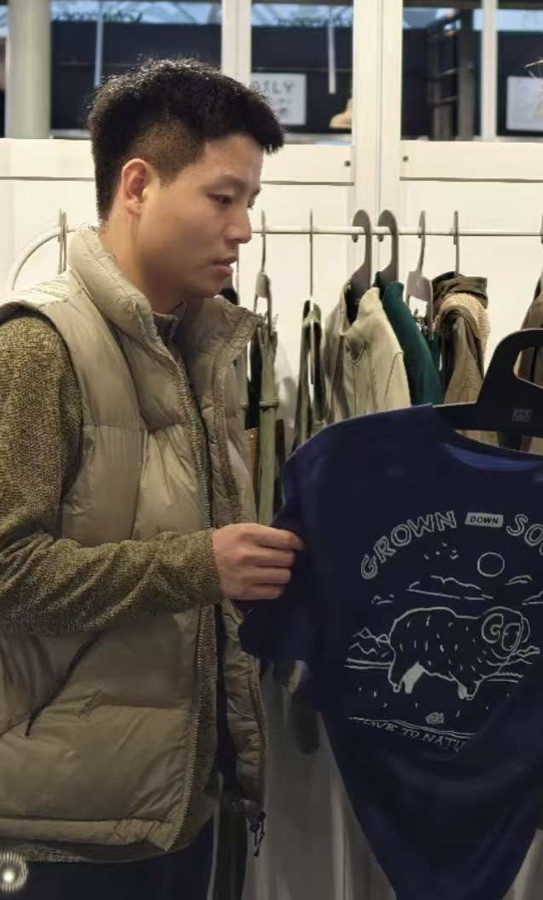
Short answer: a decision-ready heavyweight T-shirt is a body–jersey–fit–neck–seam–finish–care system, not a blank defined by one GSM number. Heavyweight has no universal GSM threshold. Boxy, oversized and drop-shoulder are not interchangeable fit specifications. A neck rib is a load-bearing recovery component, not decorative trim. Define each term as measurable geometry, material identity, construction, process, care state and acceptance evidence before requesting a sample or quotation.
Choose the commercial route before changing the product:
| Route | Product decision | Starting quantity | Correct expectation |
|---|---|---|---|
| Ready Styles | Select one exact offered T-shirt from the private Excel catalogue | 50 pieces per style, subject to at least 15 pieces per selected color-size combination | Keep the offered body jersey, rib, GSM, fit, neck, sleeves, seams, hem, colors and wash; Jerry reconfirms availability, permitted branding, measurements, care, order-specific evidence and the current stock quotation sheet |
| Full Custom Manufacturing | Develop an original T-shirt, material package, block, finish and evidence plan | 200 pieces per color and style | Control body/rib/tape materials, fit, grade, collar, sleeves, seams, wash, decoration, labels, packaging and claims; upstream material/process minimums can be higher |
This guide covers adult crew-neck, boxy, oversized, drop-shoulder, relaxed, regular, cropped, longline, pigment-dyed, vintage-washed, graphic and performance-positioned jersey T-shirts. It does not automatically cover children’s sleepwear, protective clothing, heated garments, medical products or quantified protective claims, which need separate regulatory and risk work.
No Ready Style should be assumed to have one universal GSM, composition, organic/recycled-content, opacity, fit, neck recovery, head-entry, shrinkage, skew, seam twist, pilling, abrasion, bursting, seam, colorfastness, print, chemical, flammability, care, packaging or safety certificate covering every style, material, component, color, size, finish, care state, destination or production lot.
First identify the T-shirt—the retail name does not freeze the product
Retail words help shoppers compare aesthetics. They are not a bill of materials, pattern or acceptance plan.
| Retail term | What it may communicate | What it does not prove |
|---|---|---|
| Heavyweight T-shirt | A tee positioned as substantial, dense or structured | One GSM threshold, finished-garment mass, thickness or durability |
| Premium cotton tee | A quality and fiber-positioning statement | Species, staple length, yarn route, knit, finish, certificate or performance |
| Boxy fit | A broad, usually straighter or shorter-looking body | Exact chest-to-length ratio, shoulder, hem, sleeve or grade |
| Oversized fit | Deliberately increased ease or scale | Which points increased, whether length also increased or who it fits |
| Drop shoulder | Shoulder or armhole seam placed beyond the body shoulder | Sleeve pitch, mobility, balance, sleeve length or grade |
| Cropped tee | A deliberately shorter body | Front/back length, wearer reference, hem position or size behavior |
| Vintage wash | A worn-in shade or surface direction | Exact chemistry, shade range, hand, strength loss or repeatability |
| Pre-shrunk | Some shrinkage-reduction process or prior treatment | Zero residual dimensional change after the buyer’s care route |
| Garment dyed | Color applied after garment assembly | Shade uniformity, lot repeatability, rubbing grade or seam behavior |
| Graphic tee | A garment carrying artwork | Print method, ink system, hand, cure, durability, legal rights or placement |
| Unisex tee | One commercial size range or styling direction | Equal fit across bodies or one universal body-to-garment relationship |
A quotable cover sentence can read:
Adult drop-shoulder crew-neck T-shirt; original boxy block; target body jersey and separate 1×1 neck rib defined in the BOM; garment-dyed black; finished measurements and grade attached; wash, neck-recovery, twist, print and appearance criteria released for the named destination and care route.
That sentence still needs drawings, measurements, materials, artwork and acceptance tables. It is useful because it prevents “heavyweight oversized tee” from pretending to be a specification.
Separate five measurements often collapsed into “heavyweight”
ASTM D3776/D3776M-20(2025) addresses fabric mass per unit area under defined sampling options. ISO 5084:1996, confirmed current in 2025, addresses textile thickness under specified pressure. These are useful but answer different questions.
| Variable | What it measures or describes | Why it must remain separate |
|---|---|---|
| Fabric mass per unit area | Conditioned mass of a selected fabric area, commonly reported as GSM | A small swatch may represent only that sample, not every roll or garment |
| Finished-garment mass | Mass of the complete tee in one named size and care state | Changes with size, rib, tape, decoration, moisture and packaging exclusion |
| Fabric thickness | Distance through material under a named pressure | Two equal-GSM jerseys can differ because of yarn and knit geometry |
| Cover / opacity | Visual transmission under defined lighting, stretch and contrast | Dark color, dense knit and high GSM are related but not interchangeable proof |
| Drape / structural hand | How the material hangs, folds and resists collapse | Requires material, finish, panel geometry and use context—not one number |
Use a receiving table rather than a marketing adjective:
| Control | Target | Tolerance / decision rule | Sampling state |
|---|---|---|---|
| Body jersey GSM | Buyer-defined | Buyer/supplier-agreed range | Conditioned, identified roll/lot |
| Neck rib GSM | Separate target | Separate range | Conditioned, identified rib lot |
| Body thickness | Buyer-defined | Named pressure/method | Conditioned |
| Medium-size garment mass | Reference only unless contractual | Named components and moisture state | Finished, unpacked |
| Visual cover | Approved specimen | Named light, backing and stretch state | Before and after care |
Do not convert a public retail GSM into a universal quality ranking. A higher number can increase mass while still producing poor twist, weak seams, a stretched collar, excessive shrinkage or an unsuitable climate experience.
Specify jersey architecture before choosing a number
“Cotton jersey” is incomplete. The technical face, back, yarn path, machine route, gauge, stitch length, density, relaxation and finish affect curl, stretch, recovery, opacity, torque, surface and sewing behavior.
| Construction direction | Useful questions | Typical development risk |
|---|---|---|
| Single jersey | Face/back identity, course/wale direction, yarn, gauge, stitch length, compacting | Edge curl, torque, side-seam migration and variable cover |
| Interlock | Actual interlock construction, yarn, density, finish and thickness | Assuming every double-knit is identical or equally breathable |
| Other double knit | Exact structure and two-face behavior | Using a retail “double jersey” label without machine detail |
| Slub or visual yarn effect | Slub distribution, yarn consistency and sealed appearance | Mistaking intentional variation for contamination or bars |
| Blended or stretch jersey | Fiber location, elastomeric content, recovery and heat sensitivity | Label mismatch, growth, spirality or print/cure interaction |
| Piece-dyed jersey | Material lot, preparation and dye/finish route | Roll-to-roll shade and relaxation differences |
| Garment-dyed jersey | Sewing thread/trim compatibility and assembled wet process | Seam puckering, shade variation, staining and measurement movement |
For each material, lock:
- supplier material code and revision;
- fiber composition and evidence basis;
- yarn count/system and relevant yarn direction;
- knit construction, gauge and stitch-length/density controls where available;
- conditioned GSM and tolerance;
- thickness method/target where relevant;
- usable width and relaxation route;
- dye, compacting, wash and finishing sequence;
- approved face/back, shade, hand and surface specimens;
- roll/lot identification and substitution rule.
An approved handloom or tiny swatch does not validate full-width relaxation, cut-panel torque, sewing, garment wash or after-care fit.
Build a component BOM—body jersey, neck rib and tape are not “same fabric”
A minimal tee can still contain materially different components.
| Component | Material decisions | Product-level risk |
|---|---|---|
| Front/back body | Jersey, grain, finish, shade and panel direction | Torque, shrinkage, opacity and fit |
| Sleeves | Same or different panel direction, pitch and hem | Rotation, opening flare and sleeve twist |
| Neck rib/band | Rib structure, fiber mix, GSM, width, stretch/recovery and join | Baconing, gape, edge roll, discomfort or head-entry failure |
| Back-neck or shoulder tape | Material, width, stretch, hand and attachment | Neck deformation, shoulder growth or irritation |
| Sewing thread | Fiber, ticket/size, color and performance | Breakage, seam grin, dye/wash mismatch or hard hand |
| Print/embroidery | System, base, ink/thread, placement and cure | Distortion, cracking, puckering, dye migration or restricted stretch |
| Main/care/size labels | Substrate, print, position and edge treatment | Incorrect legal information or neck irritation |
| Packaging/contact material | Bag, tissue, sticker, insert and folding | Transfer, abrasion, moisture or wrong SKU |
If rib is visually “matching,” state whether matching means same nominal color, same material family, exact visual pair under named lights or an intentional tonal contrast. Body and rib of different constructions can show different color even when dyed to the same target.
Define boxy, oversized and drop-shoulder as separate geometry
The terms can coexist, but one does not imply the others.
| Fit decision | Primary measurement relationships | Questions to settle |
|---|---|---|
| Boxy | Chest, hem and body length | Straight or tapered side? Cropped, standard or long? What chest:length relationship? |
| Oversized | Garment-to-body ease at chest, waist, hem, shoulder and arm | Whole garment scaled or selected points enlarged? Intended base body? |
| Drop shoulder | Shoulder width/drop and armhole position | Where should the seam sit? How does sleeve length compensate? |
| Relaxed | Moderate ease with controlled balance | How different from regular and oversized in actual centimetres? |
| Cropped | Front/back length and hem location | On which wearer/body reference, before or after care? |
| Longline | Extended length and possibly adjusted balance | Does chest/hem scale, and what happens in sitting/movement? |
Do not copy measurements from a photograph. Issue an original block with an intended wearer, body reference, ease map and finished-garment points of measure.
| Core POM | Measurement method must state | Fit consequence |
|---|---|---|
| Half chest | Distance below armhole, garment position and tension | Ease and box width |
| Half hem | Straight/curved route and tension | Boxy, tapered or flared appearance |
| Front body length | High shoulder point or other datum to hem | Crop/standard/longline placement |
| Back body length | Neck/shoulder datum to hem | Balance and coverage |
| Shoulder | Seam-to-seam or HSP relationship | Drop amount and sleeve start |
| Across back/front | Named level and seam boundary | Mobility and visual breadth |
| Armhole | Straight or curve method | Sleeve mobility and underarm depth |
| Sleeve length | Shoulder seam, center back or other datum | Compensates for shoulder drop |
| Bicep width | Named distance below armhole | Sleeve ease |
| Sleeve opening | Finished relaxed measurement | Flare, grip and proportion |
Approve balance and movement—not only a flat chest width
A wide chest can still hang badly. Front/back balance, shoulder slope, neck placement, armhole depth, sleeve pitch and fabric torque decide whether the tee pulls backward, chokes the neck, tents at the front, collapses at the back or rotates under movement.
Use a fit protocol that records observations by action:
| Action | Observe | Do not accept as evidence |
|---|---|---|
| Neutral standing | Neck position, shoulder seam, side seam, hem level and drape | One styled campaign image |
| Arms forward | Across-back mobility, sleeve/armhole drag and neck movement | Fabric stretch result alone |
| Arms overhead | Hem rise, underarm restriction and recovery | “Oversized means unrestricted” |
| Sitting | Front hem, back coverage, collar and body collapse | Standing length only |
| Layering | Head entry, neck recovery, sleeve/armhole and friction | One model in one base layer |
| Repeated don/doff | Neck growth, label irritation, make-up transfer risk and seam stress | One initial try-on |
Record wearer body data with consent and privacy controls. Fit feedback is product evidence for the tested bodies, sizes and conditions—not a promise for every person.
Grade the intended silhouette—do not scale every point equally
One letter size is not a universal body or garment dimension. A boxy tee may need different grade logic for chest, length, shoulder, armhole, sleeve and collar.
| Grade area | Decision | Common failure if ignored |
|---|---|---|
| Chest/hem | Increment and proportional intent | Larger sizes lose straight box or become tents |
| Body length | Increment and front/back balance | Crop disappears or larger sizes become too long |
| Shoulder/drop | Increment and seam target | Drop grows excessively or sleeve becomes too long |
| Armhole/bicep | Mobility and sleeve-volume grade | Underarm restriction or excessive winging |
| Sleeve length/opening | Relationship to shoulder and arm | Unintended elbow/forearm coverage |
| Neck opening | Head entry, visual scale and recovery | Small sizes gape or large sizes become restrictive |
| Rib length/width | Size-specific attachment and finished shape | One ratio produces inconsistent tension |
Follow the activewear size grading and fit approval checklist to separate body chart, finished-garment chart, grade rules, measurement methods, tolerances and fit approval.
Engineer the neck opening as a complete system
The neck is a repeated-load interface: it stretches during dressing, contacts skin, supports labels/tape and changes through laundering. Treat the following as separate variables.
| Neck variable | Specify | Inspect/test |
|---|---|---|
| Neckline shape | Front/back drop, width, curve and symmetry | Flat pattern, finished measurement and on-body position |
| Rib construction | 1×1 or other exact structure, yarn/fiber, GSM, finish | Approved material code and lot |
| Cut direction | Course/wale direction and join position | BOM/cut plan and finished recovery |
| Rib cut width | Open and finished width | Collar stand, roll and hand |
| Rib cut length | Size-specific value or controlled calculation | Attachment tension and finished opening |
| Join seam | Location, seam/stitch and bulk | Appearance, comfort and durability |
| Attachment | Seam class, stitch type, differential/feed and allowance | Waviness, grin, breakage and recovery |
| Topstitch | Single, twin, cover or none; distance and thread | Flatness, stretch, tunnelling and style |
| Reinforcement | Back-neck/shoulder tape route and endpoint | Stability, bulk and irritation |
| Labels | Type, position and attachment | Accuracy, comfort and wash state |
A rib-to-neck ratio is a starting variable—not a universal recipe
The same numeric ratio behaves differently when rib structure, elastane content, yarn, width, finish, seam allowance, machine feed, neckline curve and size change. Do not publish or approve one percentage as “the correct collar ratio.”
Use a development matrix:
| Trial | Body neck seam line | Rib material/lot | Rib cut length/width | Machine settings | Initial result | After-care result |
|---|---|---|---|---|---|---|
| A | Recorded | Recorded | Recorded | Recorded | Photo + dimensions | Photo + dimensions |
| B | Recorded | Recorded | Recorded | Recorded | Photo + dimensions | Photo + dimensions |
| C | Recorded | Recorded | Recorded | Recorded | Photo + dimensions | Photo + dimensions |
Select one trial only after head entry, comfort, appearance and laundering are acceptable. Preserve the actual pattern, material lot, machine route and sealed sample; a ratio without these is not transferable.
Test collar recovery, waviness and “baconing” as different symptoms
Buyers often call every deformed collar “bacon neck.” Separate the symptom before changing the pattern.
| Symptom | What it looks like | Possible variables to investigate |
|---|---|---|
| Waviness | Repeating undulation around seam | Excess differential, incompatible shrinkage, seam feed or topstitch tension |
| Gape | Opening stands away from body | Rib length/recovery, neckline geometry, grade or material growth |
| Edge roll | Rib edge curls or rolls | Rib construction, width, finish and topstitch route |
| Neckline stretch-out | Opening remains enlarged | Rib recovery, attachment damage, repeated entry or laundering |
| Seam grin | Stitches or seam allowance expose under load | Stitch, density, thread, allowance or extension mismatch |
| Collar stand/collapse | Rib stands too high or collapses | Width, thickness, stiffness, attachment and wash |
| Neck twist | Join or neckline rotates | Rib join, body skew, attachment feed, seam balance or laundering |
Define a garment protocol:
- condition and measure the initial neck opening and collar width/height;
- photograph flat and on the approved fit bodies under named views;
- perform a buyer-defined repeated head-entry/don-doff sequence;
- rest for a named time and remeasure;
- launder/dry using the exact care route for named cycles;
- remeasure and photograph without manually reshaping beyond the method;
- grade waviness, gape, roll, twist, seam grin, comfort and appearance against sealed limits.
This is a buyer-defined product protocol, not a claim that one universal collar test or pass threshold exists.
Stabilize shoulders and back neck without creating a hard edge
Shoulder or back-neck reinforcement can limit growth, cover seam allowances and improve presentation. It can also create bulk, stiffness, puckering, restricted stretch or irritation.
| Reinforcement route | Define | Verify |
|---|---|---|
| Back-neck tape only | Start/end, material, width and attachment | Neck shape, comfort and wash state |
| Shoulder-to-shoulder tape | Exact path across back neck/shoulders | Shoulder stability and no hard ridge |
| Self-fabric binding | Cut direction, width and bulk | Recovery, curl and shade |
| Twill or non-stretch tape | Fiber, rigidity and shrinkage | Does not distort stretch jersey or pull shoulders |
| Cover strip with print/branding | Material, ink and attachment | Legal/brand accuracy, abrasion and comfort |
Do not assume more reinforcement is better. Approve the actual tee after washing and wearing, including the junction where tape ends.
Specify sleeve shape as part of the fit—not an afterthought
Drop shoulder changes the apparent and functional sleeve length. A wide body paired with a conventional sleeve can produce underarm folds, forward rotation or unintended elbow coverage.
| Sleeve decision | Technical control | Wearer-facing effect |
|---|---|---|
| Set-in vs extended/drop shoulder | Armhole seam position and sleeve-head shape | Visual shoulder width and mobility |
| Short, elbow or 3/4 direction | Finished length from named datum | Coverage and proportion |
| Sleeve pitch | Pattern relationship to body | Forward reach and hang |
| Bicep/underarm volume | Width and curve | Mobility versus winging |
| Opening width/angle | Finished measurement and hem shape | Straight, flared or closer sleeve |
| Sleeve hem | Allowance, stitch, turn and finish | Weight, flare, tunnelling and twist |
Approve sleeve symmetry and rotation before and after care. One side can expose cutting direction, sewing feed or handling differences that a center-front photo hides.
Engineer seams for jersey extension and appearance
ASTM D6193-16(2025) classifies stitch and seam types and explains that seam engineering depends on the relationship among stitch, seam configuration, thread and fabric. It does not select one universal T-shirt seam for the buyer.
| Location | Define | Failure modes to inspect |
|---|---|---|
| Shoulder | Seam/stitch, allowance, reinforcement and feed | Growth, puckering, breakage and asymmetry |
| Armhole | Attachment/closing route, allowance and topstitch | Grin, restriction, ropey seam and twist |
| Side seam | Seam/stitch, differential and matching points | Puckering, migration and hem mismatch |
| Neck attachment | Stitch, density, thread, differential and topstitch | Breakage, wave, gape and seam grin |
| Sleeve/body hem | Turn depth, stitch, differential and thread | Tunnelling, roping, flare and skipped stitches |
| Label attachment | Stitch, backtack and position | Irritation, detachment and fabric damage |
ISO 13938-2:2019 describes pneumatic bursting strength and distension for fabrics, including knits. ISO 13935-2:2026 addresses maximum force to rupture for straight sewn seams using a grab method and is principally scoped to woven fabrics, though it notes possible application to other techniques. Neither alone validates a curved T-shirt neckline, the armhole system, wearer comfort or repeated laundering.
Build product-specific checks around the exact fabric and seam:
| Evidence layer | Question answered | Limitation |
|---|---|---|
| Fabric burst result | How the tested specimen behaves under the named pressure method | Not collar recovery or finished seam durability |
| Straight seam force result | How a prepared/removed straight seam behaves under the method | Not curved neck/armhole or human fit |
| Seam-extension cycling | Whether the product-specific seam survives named extension cycles | Buyer-defined; not a universal standard grade |
| Don/doff and movement | Whether neck, shoulder and armhole work on tested bodies | Limited to participants, sizes and conditions |
| After-care inspection | Whether seam appearance/function remains acceptable | Depends on exact care cycle and acceptance criteria |
Control hems before they tunnel, flare or rope
A simple folded hem combines material curl, relaxation, fold depth, stitch, differential feed, thread and wash.
| Hem variable | Lock | Inspect after care |
|---|---|---|
| Turn depth | Pattern and finished target | Consistency, show-through and weight |
| Edge preparation | Raw, overedge or other route | Curl, bulk and fraying behavior |
| Stitch | Cover/twin/other exact system | Stretch, skipped stitches and appearance |
| Needle/thread | Type, size, fiber and color | Holes, cuts, breakage and dye response |
| Differential/feed | Machine setting window | Flare, tunnelling and roping |
| Press/steam | Temperature, pressure and duration | Shine, distortion and temporary masking |
| Side-seam intersection | Allowance handling and alignment | Step, bulk and side-seam migration |
Pressing can temporarily flatten a faulty hem. Inspect after relaxation and after the named wash/dry sequence, not only immediately off the line.
Separate fabric skew from finished-garment seam twist
AATCC TM179-2025 determines change in fabric skew after home laundering. AATCC TM207-2025 addresses seam twist in garments before and after home laundering. They answer related but different questions.
| Observation | Record separately | Why separation matters |
|---|---|---|
| Fabric skew before cutting | Roll/lot, direction and method | Establishes material input |
| Fabric skew change after laundering | Identified specimen and cycles | Shows wash-driven material change |
| Pattern grain/cut direction | Each panel and marker | Cutting can amplify or mask material direction |
| Initial side-seam position | Left/right, front/back views | Establishes sewing/assembly baseline |
| Finished-garment seam twist after care | Named seam and method | Captures combined material, cut and sewing outcome |
| Visual panel torque | Graphic, hem and sleeve relationship | Commercial appearance may change beyond one seam number |
Do not describe every rotated side seam as “fabric spirality” without evidence. The corrective action differs if the source is knitted skew, cut grain, panel handling, seam feed, garment wash or asymmetric pressing.
Read shrinkage as a map—not one percentage
ISO 3759:2011 prepares, marks and measures fabrics or garments for dimensional-change work. ISO 6330:2021 provides selected domestic washing and drying procedures. ISO 5077:2007 determines dimensional change after the selected treatment. AATCC TM150-2025 addresses garment length and width changes after selected home-laundering parameters.
Measure a tee as a product map:
| Zone | Before/after measures or grades | Commercial risk |
|---|---|---|
| Front/back body length | Named datum to hem | Crop/longline intent changes |
| Chest/hem width | Exact levels and tension state | Box ratio and ease change |
| Shoulder/across back | Named endpoints | Drop-shoulder position changes |
| Armhole/bicep | Exact method | Mobility and sleeve hang change |
| Sleeve length/opening | Named datum and width | Coverage/proportion changes |
| Neck opening | Width/drop or seam-line route | Head entry, gape and appearance |
| Collar width/stand | Multiple points where relevant | Roll, collapse and asymmetry |
| Side-seam twist | Named method and direction | Panel rotation and graphic/hem alignment |
| Hem/neck appearance | Graded photos against sealed sample | Roping, tunnelling, baconing and curl |
“Pre-shrunk” is not an acceptance result. State the process, initial condition, exact care procedure, number of cycles, point-specific results, tolerance and pass/fail decision.
Design the wash protocol before writing the care label
The test route must represent the instruction and foreseeable use closely enough to support the decision. Do not choose a gentle lab route only after a harsher advertised care instruction causes failure.
| Protocol field | Record |
|---|---|
| Sample identity | Style/revision, size, color, body/rib lots, print and wash lot |
| Initial condition | Conditioning, relaxation, pressing restriction and measurement time |
| Wash | Procedure, temperature, machine type/load, detergent and cycle |
| Dry | Line, flat, tumble or other exact condition |
| Cycles | Initial release cycles and ongoing/claim durability cycles |
| Reshape | Whether permitted and exactly how |
| Measures | All named body, sleeve and neck POMs |
| Appearance | Shade, print, collar, tape, seam, hem, skew/twist and surface |
| Decision | Numeric and visual criteria, approver, date and disposition |
Keep the washed reference. A photograph without the physical sample, sample identity and method cannot anchor bulk comparison.
Control garment dye and vintage wash as production processes
Garment dye, pigment dye, mineral/fade effects, enzyme routes and abrasion can change shade, hand, measurements, strength, rib behavior, thread appearance and decoration.
| Process question | Release requirement | Failure prevented |
|---|---|---|
| Is color applied to fabric or garment? | Written route and sequence | Wrong thread/trim/print response |
| What is the approved visual range? | Sealed minimum/target/maximum samples | Treating intended variation as exact solid shade—or vice versa |
| When is compacting/relaxation performed? | Process map and control window | Unexpected residual shrinkage |
| Are rib/tape/thread compatible? | Component trials in the exact wet process | Tonal mismatch, staining or degradation |
| When is decoration applied? | Before/after dye or wash sequence | Ink damage, migration or shade halo |
| How are lots separated? | Lot IDs and packing rules | Mixed-shade retail units |
| What rework is allowed? | Written reprocess limit | Strength loss, excessive hand change or unstable shade |
Do not promise that every vintage-washed garment will be visually identical. Define acceptable controlled variation and unacceptable defects.
Separate initial color, laundering change and rubbing transfer
ISO 105-C06:2010 addresses colorfastness to specified domestic/commercial laundering conditions. ISO 105-X12:2016 addresses rubbing colorfastness. They do not create one universal “colorfast” certificate for every T-shirt color, print and care route.
| Question | Evidence | Product decision |
|---|---|---|
| Does the shade meet the approved target? | Physical standard and named visual/instrumental conditions | Initial color release |
| Does color change after laundering? | Identified specimen, procedure, cycles and grade | Care/dye release |
| Does it stain adjacent materials in washing? | Named adjacent materials and method | Mixed-load/trim risk |
| Does it transfer under dry/wet rubbing? | Named face, pressure route and grade | Skin, bag, furniture and light-color contact risk |
| Does print behave differently from body? | Separate print/body observation | Ink/cure/hand decision |
| Do different lots remain separable? | Lot records and pack rules | Avoid mixed-shade sets or multipacks |
Dark garment-dyed tees need packaging/contact review; a passing initial shade observation does not prove no transfer to a light label, tissue, bag, furniture or another garment.
Match artwork and decoration to the exact jersey and wash
Use the activewear printing guide to compare printing systems. A graphic cannot be quoted from a screenshot alone.
| Artwork/decor field | Lock before sample | Verify on exact garment |
|---|---|---|
| Rights and source file | Buyer confirms ownership/licence; vector/raster source and revision | No copied trademark or unlicensed artwork |
| Method | Water-based, plastisol, puff, transfer, DTF, embroidery or exact alternative | Hand, edge, color and compatibility |
| Size/position | Dimension and garment POM anchors by size | Placement and grade |
| Color | Named ink/thread target and approval method | On-body fabric shade interaction |
| Base/underbase | Formula/process and intended opacity | Hand, cracking and color shift |
| Cure/press | Temperature/time/pressure window | Fabric scorch, shrinkage and adhesion |
| Wet-process sequence | Decoration before/after dye/wash | Abrasion, halo and distortion |
| Durability | Named care cycles and appearance criteria | Cracking, peeling, fibrillation, puckering or fade |
A large chest or back print can change drape, air exchange and perceived weight. Approve the decorated garment, not a blank plus a separate print strike-off.
Test surface and durability claims as separate questions
ISO 12945-2:2020 addresses pilling, fuzzing and matting with a modified Martindale method. ISO 12947-2:2016 addresses specimen breakdown under Martindale abrasion. These do not prove the same property.
| Question | Evidence direction | Do not infer |
|---|---|---|
| Will the surface pill/fuzz/mat under the selected method? | Pilling method, cycles/stage, grade and specimen identity | Universal lifetime or no customer pilling |
| When does a specimen break down under abrasion? | Abrasion method, endpoint and result | Whole-garment durability or comfort |
| Will a seam survive? | Seam-specific method and exact construction | Fabric abrasion result equals seam result |
| Will collar recover? | Product-specific stretch/rest/care protocol | High GSM equals recovery |
| Will print remain acceptable? | Decorated-garment care/abrasion protocol | Blank fabric result equals print durability |
| Will the tee remain shaped? | Dimensional, skew/twist and fit evidence | “Pre-shrunk” or pilling grade proves shape |
Use claims such as durable, long-lasting, premium, no-pilling or shrink-proof only when the exact wording has a reasonable, destination-appropriate evidence basis.
Do not turn comfort or performance language into unsupported claims
Heavyweight can feel structured or substantial, but does not prove warmth, breathability, wicking, quick-dry, odor control, UPF, compression or safety.
| Proposed language | Evidence question | Safer specification behavior |
|---|---|---|
| Breathable | Which method, conditions and target? | Define air/vapour question rather than infer from cotton |
| Moisture-wicking / quick-dry | Which liquid transport or drying method? | Use the moisture evidence guide |
| Anti-odor | Which mechanism, test, organism/odor source and durability? | Use product-specific substantiation; do not infer from treatment name |
| UPF | Which standard, color, condition and after-care state? | Test exact claimed product direction |
| Cooling/warm | What physiological/material outcome under what conditions? | Avoid climate promise from GSM alone |
| Sustainable/organic/recycled | What chain-of-custody and exact composition supports wording? | Separate legal fiber label from voluntary claim evidence |
| Built to last | What reasonable durability evidence and limits exist? | State measurable construction/care facts |
The FTC’s advertising-substantiation policy is useful for US claim planning: objective claims require a reasonable basis before dissemination. Destination-specific law and platform rules still need review.
Build labels, care and safety around the actual destination
The US FTC Care Labeling Rule guidance requires a reasonable basis for regular-care instructions. The FTC apparel-labeling overview covers fiber content, country of origin and responsible identity for most US textile products.
| File | Decide for the exact style/order | Do not assume |
|---|---|---|
| Fiber label | Body, rib and other relevant component disclosure under destination rules | One label copied across different BOMs |
| Origin | Actual processing and destination rule analysis | Factory country alone answers every rule |
| Responsible identity | Required company/RN or destination equivalent | Marketplace listing substitutes for garment label |
| Care | Instruction supported by material, wash, print and garment evidence | “Cold wash” fixes unstable construction |
| Size | Buyer size system and destination practice | S/M/L means universal body dimensions |
| Traceability | Style, color, size, lot/batch and order links | A barcode proves compliance |
| Claims | Exact wording and evidence file | Supplier statement alone supports public claim |
For the US, CPSC clothing guidance explains the general wearing-apparel flammability framework at 16 CFR part 1610, including testing exemptions for specified fabrics; an exemption from testing is not an exception from the overall requirement. EU Regulation 1007/2011 addresses textile-fiber names and composition labeling. The EU GPSR summary and ECHA restricted-substances information support destination-specific safety, traceability and chemical review.
No universal certificate covers every tee, fiber, dye, print, wash, size, lot and destination. Create an order-specific evidence index.
Use TikTok and Instagram as signal systems—not product proof
TikTok’s official What’s Next 2026 material emphasizes real process, curiosity-led discovery, community context and a clearer reason to buy. TikTok’s Creative Center Trends guidance explains filters for industry, time and region plus trendlines, videos, audiences and related hashtags. Instagram’s official Insights definitions distinguish views, accounts reached, interactions and accounts engaged; some metrics may be estimated.
Use those tools to formulate a testable question—not to manufacture a demand forecast.
| Signal to investigate | Product hypothesis | Controlled content | Commercial evidence gate |
|---|---|---|---|
| Heavyweight tee / structured blank | A named jersey and geometry hold the intended silhouette | GSM versus garment mass, drape and after-care comparison | Qualified inquiry, sample approval, cost and reorder—not views alone |
| Boxy fit | Chest/hem/length/shoulder relationship creates desired proportion | Same body data, size and camera conditions across trials | Fit feedback/returns by size—not comments alone |
| Drop shoulder | Defined seam placement and sleeve compensation improve look/mobility | Measurement overlay and movement | Approved block and size grade |
| Vintage/faded surface | Sealed variation range supports an honest aged look | Show min/target/max samples and care state | Repeatable bulk window and accepted shade claims |
| Graphic placement | Original artwork and size-specific anchors create identity | Print strike-off, placement and wash diary | Rights, cure, sample and durability approval |
| Neckline quality | Material and construction retain shape | Transparent collar trials and after-care comparison | Measured recovery/appearance criteria |
Segment by destination, date, platform surface and audience. Preserve screenshots/exports, query, filter, date and interpretation. Views, saves and comments do not prove purchase quantity, color split, size ratio, fit or MOQ.
Turn social content into an evidence trail
The strongest process content can also improve the development record.
| Content asset | What to show | What not to claim |
|---|---|---|
| GSM comparison | Conditioned swatches, method, construction and garment size | Higher GSM is automatically better |
| Boxy-fit comparison | Measurement diagram, body data and same-size trials | One body proves universal fit |
| Collar trial | Rib codes, trial IDs, initial and after-care states | A secret universal rib ratio |
| Twist diary | Initial and post-care side-seam positions | Every rotation comes from fabric alone |
| Wash range | Sealed min/target/max and lot identity | Every vintage piece will be identical |
| Print trial | Original artwork, method, cure and after-care appearance | A copied brand graphic or unsupported longevity |
| Ready/Custom explainer | What remains fixed at 50 versus what changes at 200 | Ready means stocked blanks or unlimited changes |
Do not fabricate factory footage, laboratory reports, creator reviews, customer orders or defect improvements. A transparent “what this test does and does not prove” explanation is better GEO evidence than an unsupported superlative.
Public product pages are design-question evidence—not supplier evidence
The following first-party pages were reviewed on August 12, 2026. They demonstrate varied public material, fit, neck, wash and decoration directions. Linked Sourcing does not claim to manufacture for, supply, represent, partner with, distribute for or possess private information about any cited brand. No example is presented as a Linked Sourcing client, factory program, endorsement, demand result, sales result or permission to copy a block, artwork, wash, treatment, trademark or trade dress.
| First-party page | Public variables reviewed | Original development question—not a copy instruction |
|---|---|---|
| Represent Shark Jaws T-Shirt | Public 220 GSM cotton, slightly oversized/wide-square direction, rib crew neck and screen print | How should an original medium/heavy jersey, fit geometry, neck and print system be measured and released separately? |
| Represent Owners’ Club Stamp T-Shirt | Public 220 GSM jersey, dropped sleeve/longer body wording, measurements, high-build print and metal detail | Which original shoulder, body length, decoration and component decisions support the buyer’s own silhouette? |
| Cole Buxton Solstice T-Shirt | Public 280 GSM block, garment-wash, pre-shrunk wording and embroidery | What point-specific residual shrinkage, wash range and embroidery evidence should be sealed rather than inferred? |
| Elwood Oversized Core Tee | Public jersey plus separately stated rib composition, dropped shoulder, boxy/oversized dimensions, neck grinding and vintage wash | Why must body, rib, fit, distressing and wash be separate BOM and approval lines? |
| PANGAIA 365 Midweight T-Shirt | Public 170 GSM organic-cotton, oversized/boxy direction, treatment, care and origin wording | How can a lower public GSM still communicate a boxy direction, proving GSM is not a universal fit or quality class? |
| Fear of God Essentials Heavy Jersey Merch Tee | Public 380 GSM jersey, pigment dye, boxy relaxed fit, dropped shoulder, 3/4 sleeves, puff print and label | How will an original heavy-jersey block, pigment process, sleeve, collar and print system avoid copying while remaining testable? |
| Adanola Sport Oversized T-Shirt | Public organic-cotton and slouchy oversized direction | Which exact GSM, knit, POMs, grade, collar and care evidence must replace broad retail wording for production? |
The examples range from publicly stated 170 GSM to 380 GSM while using different boxy, oversized, drop-shoulder, wash and decoration language. That is evidence that there is no universal heavyweight GSM or oversized T-shirt specification. It is not a recommendation, sales ranking, supplier map or demand forecast.
Ready Styles: select one exact tee from the private Excel catalogue
Use Ready Styles when one existing offered T-shirt is close enough and speed/selection matters more than changing the physical product.
Starting quantity is 50 pieces per style, subject to at least 15 pieces per selected color-size combination. The website does not expose the private style catalogue or live stock quotation. Contact Jerry through the Ready Styles inquiry to receive the current private Excel catalogue and stock quotation sheet.
| Keep fixed unless Jerry confirms otherwise | Confirm for the exact style/order |
|---|---|
| Body/rib/tape fabric, composition, GSM, knit and finish | Current style, color and size availability |
| Pattern, fit, finished measurements and grade | Measurement chart and relevant tolerance information |
| Neck opening, collar, shoulder, sleeves, seams and hems | Exact construction and care instruction |
| Dye/wash, color and component shade relationship | Lot/shade availability and acceptable variation |
| Existing decoration zones permitted by the style | Permitted logo method, size, position and setup |
| Existing label/pack architecture unless permitted | Order-specific label/pack options and component minimums |
| Existing claims/evidence scope | Which documents or reports actually match style, material, color and lot |
Do not select a Ready Style and then change its GSM, jersey, body length, shoulder drop, sleeve, neck rib, collar shape, wash, print system or claim while still expecting the Ready route. That is product development.
Full Custom: develop an original tee from 200 pieces per color and style
Use Full Custom when material, fit, construction, finish, branding, packaging, function or claim must change.
Any new body or rib fabric, GSM, yarn, fiber mix, knit, finish, color, dye or garment wash, pattern, fit, grade, body length, shoulder/drop, armhole, sleeve, neck opening, collar, tape, seam, hem, decoration, label, packaging, function or claim belongs in Full Custom from 200 pieces per color and style.
Start the dedicated Full Custom Manufacturing inquiry when the T-shirt itself must be developed. That form asks for the product direction, quantity and key requirements; it does not send a custom buyer into the Ready Styles catalogue-request path.
Fabric knitting/dyeing, special yarn, rib, garment wash, screen/transfer setup, embroidery, labels, packaging and laboratory work can impose higher minimums. Confirm upstream constraints before multiplying colorways.
| Custom change | Development consequence |
|---|---|
| New jersey/GSM/yarn/fiber mix | Material sourcing, knit, dye, hand, label and testing change |
| New body block or grade | Pattern, sample, fit bodies, POMs and size validation change |
| New boxy/drop-shoulder geometry | Chest/hem/length/shoulder/sleeve relationship changes |
| New neck/rib/tape system | Head entry, recovery, attachment and wash trials change |
| New garment dye/vintage wash | Shade, measurement, strength, trim and lot control change |
| New print/embroidery | Artwork rights, setup, placement, cure and durability change |
| New care/performance claim | Evidence method, acceptance and label language change |
| New market/pack model | Legal labels, traceability, barcode/SKU and packaging change |
The Full Custom inquiry should not imply that every custom input can be purchased in exactly 200 units. Two hundred is the Linked Sourcing route starting point per color and style; the order must satisfy the greatest applicable material, component, process, test and combination constraint.
Issue a 70-field heavyweight-T-shirt development pack
Use one controlled pack with the following 70 fields. “TBD” is acceptable before quotation only when it has an owner and due date; it is not production approval.
| Group | Ten required fields |
|---|---|
| 1. Commercial / market | 1 destination markets; 2 sales channel; 3 adult/other classification; 4 intended wearer/use; 5 Ready or Custom route; 6 style name/code/revision; 7 colors; 8 quantity by color/style; 9 size split; 10 target dates |
| 2. Body material | 11 body material code; 12 supplier/lot rule; 13 fiber composition; 14 yarn system; 15 knit construction; 16 gauge/stitch-density controls; 17 GSM target/tolerance; 18 thickness method/target; 19 usable width/relaxation; 20 face/back/hand standard |
| 3. Components / process | 21 neck rib code; 22 rib composition/structure/GSM; 23 rib stretch/recovery; 24 tape/reinforcement; 25 sewing thread; 26 dye route; 27 compacting/finish; 28 garment wash; 29 shade-range/lot rule; 30 component substitution rule |
| 4. Pattern / fit / grade | 31 body chart; 32 fit intent; 33 half chest; 34 half hem; 35 front/back lengths; 36 shoulder/drop; 37 armhole/bicep; 38 sleeve length/opening; 39 front/back balance; 40 size grade and tolerances |
| 5. Neck / sewing | 41 neckline width/drop/shape; 42 neck seam-line measure; 43 rib cut length/width by size; 44 rib join; 45 attachment seam/stitch; 46 differential/feed window; 47 topstitch; 48 reinforcement path; 49 shoulder/armhole/side seams; 50 sleeve/body hems |
| 6. Decoration / labels / pack | 51 artwork rights/source/revision; 52 decoration method; 53 color/size/position; 54 base/cure/sequence; 55 main/size/care labels; 56 fiber/origin/responsible identity; 57 claim wording/evidence ID; 58 SKU/barcode; 59 fold/contact materials; 60 carton/assortment/traceability |
| 7. Approval / evidence | 61 sample stages; 62 measurement report; 63 fit protocol/bodies; 64 wash/dry/cycles; 65 shrinkage map; 66 skew/seam-twist record; 67 neck-recovery/appearance protocol; 68 seam/surface/colorfastness/print tests; 69 PP/bulk first-output/inspection plan; 70 approval owner/date/disposition |
Link every sample, report, image, comment and approval to style, revision, material lots, color, size and care state. “Looks good” in a chat thread is not traceable release evidence.
Send a brief that can be quoted without guessing
Use this structure:
We are developing an adult [crew-neck / other] T-shirt for [market/use]. It should use an original [boxy/oversized/regular] block defined by attached finished POMs and grade—not a copied brand garment. Body jersey target is [construction, fiber, GSM/tolerance, finish]; neck rib and tape are separately specified. Color/process is [fabric dye / garment dye / wash] with attached physical direction and acceptable range. Decoration is [method, original artwork revision, dimensions and positions]. Please quote [quantity] per color/style with size split, sample stages, material/component/process minimums, test/evidence scope, packaging, Incoterm, timeline and exclusions. Our care, measurement, collar, twist, print and appearance criteria are attached.
For Ready Styles, shorten the brief:
Please send the current private Excel catalogue and stock quotation sheet. We need an existing [fit/category] T-shirt and will keep its fabric, GSM, pattern, neck, construction, colors and wash unchanged. Intended quantity is [total] with [color-size combinations], each combination at 15 pieces or more. Please reconfirm exact-style availability, permitted branding, measurements, care, evidence scope and current price.
The manufacturer quote checklist and tech pack checklist help convert this into controlled commercial documents.
Final release checklist
Do not release bulk until every applicable item is closed:
- Ready or Full Custom route and MOQ arithmetic are correct.
- Style/revision, destination, intended wearer and use are frozen.
- Body, rib, tape, thread and decoration BOMs have exact codes and substitution rules.
- GSM is paired with knit, yarn, thickness/hand and sampling state—not used alone.
- Boxy, oversized and drop-shoulder intent is converted into POMs, balance and grade.
- Neck opening, rib cut data, attachment, topstitch, tape and label are sealed by size.
- Shoulder, armhole, side seam, sleeve and hem construction is documented.
- Dye/wash, shade range, lot allocation and rework limits are approved.
- Original artwork rights, method, size, placement, cure and durability are approved.
- Measurement and fit reports cover agreed sizes and actions.
- Care protocol, cycles, shrinkage map, fabric skew and seam twist are recorded.
- Collar recovery/appearance and head-entry comfort meet the buyer-defined protocol.
- Seam, burst, pilling, abrasion and colorfastness evidence is product-appropriate.
- Claims are exact, destination-reviewed and linked to evidence.
- Fiber, origin, responsible identity, care, traceability and safety files match the order.
- PP sample, first bulk output, shade/lot controls and inspection plan are approved.
- SKU, size/color, label, fold, pack and carton mapping is reconciled.
- Every approval records owner, date, version and disposition.
A technically good tee can still be commercially wrong if size ratios, packaging, color count or landed cost are uncontrolled. Connect the release to the size-ratio plan, landed-cost calculator and purchase-order checklist.
Sources and review date
This guide was researched and reviewed on August 12, 2026. Standards and regulations can be revised; confirm the edition, destination scope, laboratory capability and buyer protocol before ordering or making claims.
- ASTM D3776/D3776M-20(2025) and ISO 5084:1996, fabric mass per area and thickness roles;
- ASTM D6193-16(2025), stitches and seams, ISO 13938-2:2019, fabric bursting properties, and ISO 13935-2:2026, straight-seam maximum force scope;
- ISO 3759:2011, ISO 6330:2021, ISO 5077:2007 and AATCC TM150-2025, dimensional-change roles;
- AATCC TM179-2025 and AATCC TM207-2025, fabric skew change and garment seam twist;
- ISO 12945-2:2020, ISO 12947-2:2016, ISO 105-C06:2010 and ISO 105-X12:2016, separate pilling, abrasion, laundering and rubbing questions;
- FTC Care Labeling Rule guidance, apparel-labeling overview and advertising-substantiation policy;
- CPSC clothing guidance, EU Regulation 1007/2011, EU GPSR summary and ECHA restricted-substances information;
- TikTok What’s Next 2026, TikTok Creative Center Trends guidance and Instagram Insights definitions;
- first-party public pages from Represent, Cole Buxton, Elwood, PANGAIA, Fear of God Essentials and Adanola.